
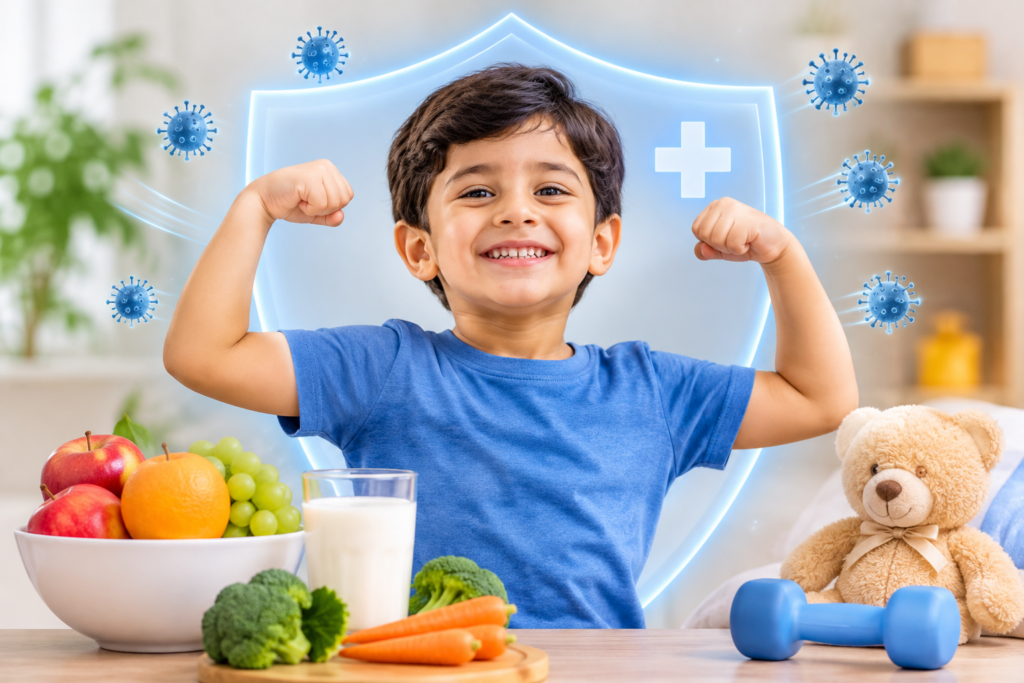
Every parent hopes there’s a quick way to boost child immunity. There isn’t one. What works is slower and far less exciting: proper meals, early nights, plenty of running about and soap at the sink, along with every vaccine your child is due. But a child who is unwell every other week deserves a closer look from a doctor.
According to Dr. Sagardeep Singh Bawa, Consultant Pediatrician in Noida and Neonatologist at Cuddles & Cutis, “Most parents arrive asking for a tonic. What I usually tell them is that regular meals, a proper night’s sleep, time outdoors and clean hands do most of the work. Children who have these basics in place tend to handle infections better.”
How Can Parents Prevent Winter Nosebleeds?
It’s mostly ordinary routine, done consistently.
Balanced meals. A normal home-cooked plate does the job: dal or rajma, roti or rice, curd, a seasonal fruit and whatever vegetable is on the table. An egg or some paneer adds protein. Together these give a child the iron, zinc and vitamins the body needs.
Enough sleep. Late nights show up quickly: the child is tired, snappy and down with a cold by the weekend. Between six and twelve years, nine to twelve hours is the target, and the tablet should go away an hour before bed.
Daily activity. The WHO recommends about 60 minutes of active play every day for children aged 5 to 17. Cycling, football or a game of tag in the colony counts. Being outside also gets them some sunlight, which helps the body produce vitamin D .
Clean hands. Hands should be washed before eating, after using the toilet and on coming home. It’s a small habit that saves many sick days. Teach children to cover their mouth and nose with their elbow when coughing or sneezing..
Vaccinations on time. Vaccines give the body a head start against serious infections, so don’t let the schedule slip.
What Can Weaken a Child’s Immunity?
Rarely just one thing.
- Poor sleep and junk-heavy meals. Chips, biscuits and sweet drinks fill little stomachs but give little back. Add late nights and the body has less to work with.
- Nutrient gaps. Iron and vitamin D run low in many children, and you won’t know without a test. Supplements are for children a doctor has found deficient, not for everyone.
- Smoke and polluted air. Cigarette smoke at home, and the poor air quality Delhi NCR sees every winter, irritate the airways and make coughs and chest infections more likely.
- Crowded settings. Put twenty children in a classroom and germs travel fast. Don’t be alarmed by a few colds a year in the early school years, as that’s common.
- Missed vaccines or an underlying condition. A missed vaccine leaves a gap that an infection can use. Allergies, asthma and anemia can also keep a child unwell on and off.
If your child seems to be unwell all the time, visit a pediatrician
What Decides the Right Approach for Your Child?
There’s no single answer.
Age and stage. A baby starting solids and a school-going child need very different advice.
Growth and food. Weight, height and what actually ends up on the plate tell a doctor quickly if something is missing.
Medical history. Earlier illnesses, allergies and the vaccination card can all influence their healthcare needs
Daily environment. Whether they’re in nursery or school, whether someone smokes at home, how much time they spend outdoors: all of it counts.
Immunity syrups rarely live up to their labels, and a child who already eats well gains nothing from extra vitamins. This is a slow process that plays out over childhood, and the routine you keep is what counts. For a plan that fits your child, see a pediatrician who can examine them first. For further information, learn more about the paediatric services available for children
FAQs
Regular, balanced meals, enough sleep, daily outdoor play, clean hands and every vaccine on time
Not usually, unless a doctor has found a deficiency such as low iron or vitamin D to fix.
Schools and nurseries pass germs around, but see a pediatrician if the illnesses are severe or just keep coming back.
School-age children need nine to twelve hours a night, and younger children need more.
References
- World Health Organization (WHO) – Healthy Diet
https://www.who.int/en/news-room/fact-sheets/detail/healthy-diet
Explains balanced nutrition, fruits, vegetables, whole grains and essential nutrients for children’s growth.
- NHS: Vaccinations and when to have them. Explains why timely childhood immunization protects against serious disease. https://www.nhs.uk/vaccinations/nhs-vaccinations-and-when-to-have-them/
Disclaimer: This article is for informational purposes only and should not be considered medical advice. Always consult a qualified pediatrician for proper diagnosis and treatment of your baby’s skin condition.
