
Have you ever noticed a sudden nose bleed in your child who has a common cold in winter? As a parent, it must be a very worrying experience, particularly if it keeps repeating itself. The nose bleed caused by winter weather conditions and common cold can happen because of dryness and irritation of the inner lining of the child’s nose.
Answer is: Yes, cold weather conditions and common cold infections can lead to nose bleeds in kids. Dryness in winter, irritation in the nose, constant sneezing and nose blowing can cause harm to the small blood vessels in the nose. Minor nosebleeds can be taken care of using proper first aid.
Why Does Nose Bleeding Occur in Children During Winter?
Inside the nose is lined with many small blood vessels located very near the surface. They are sensitive and tend to bleed in case of dryness, cracking and irritation of the nasal lining.
In winter, the air in the room gets dry due to low humidity levels. A cold may aggravate the irritation of the nose by creating congestion, rhinorrhea (runny nose) and sneezing.
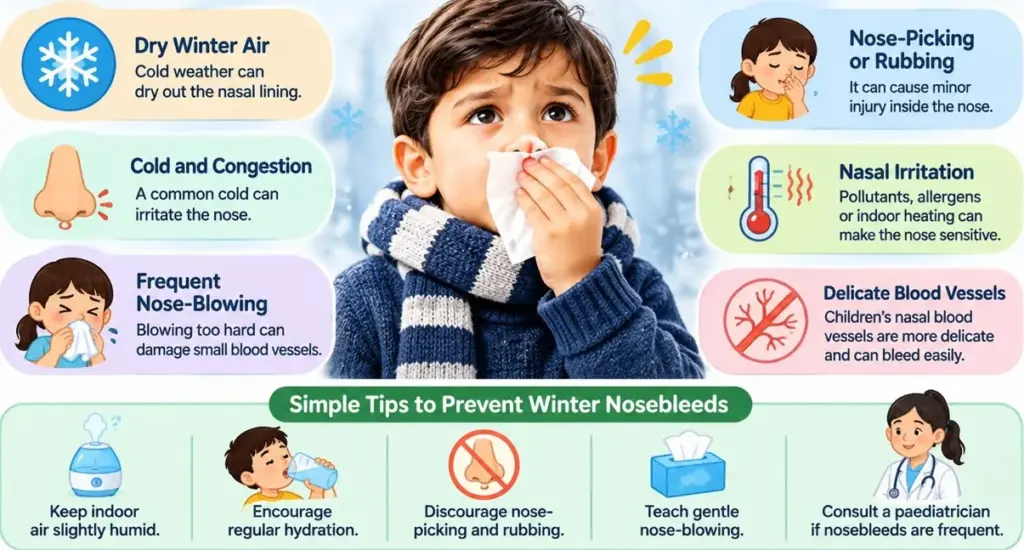
A nosebleed does not automatically mean that the cold has become serious. However, the frequency and amount of bleeding matter.
“During winter, dryness and irritation inside the nose can make a child’s small blood vessels more vulnerable to bleeding. Parents should focus on gentle nasal care and avoid forceful nose-blowing.”- Pediatrician Dr. Sagardeep Sing Bawa
What Should Parents Do When a Child Has a Nosebleed?
Stay calm and follow these first-aid steps:
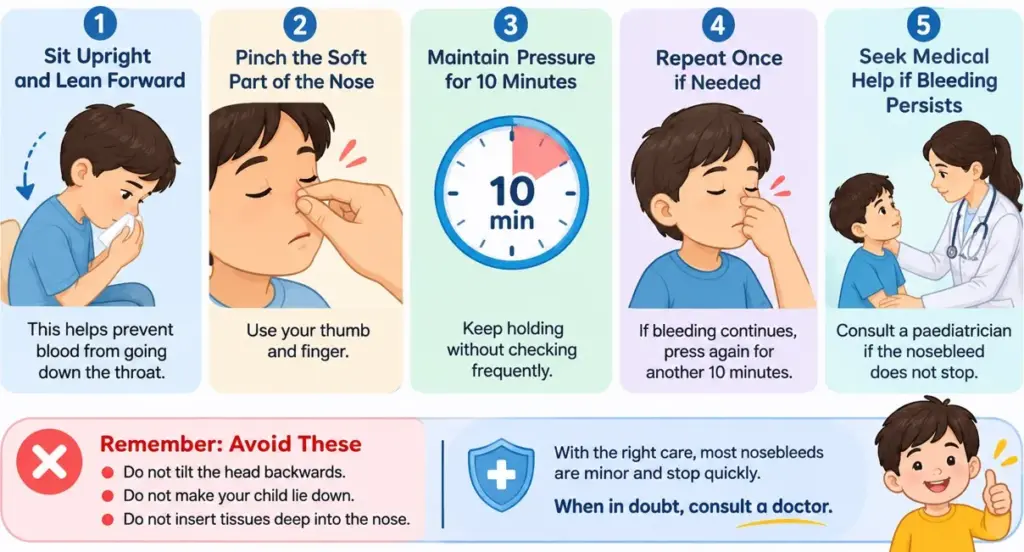
Do not tilt your child’s head backwards, make them lie flat or push tissues deep inside the nostrils. These actions may cause blood to flow down the throat.
If bleeding continues after these attempts, seek urgent medical assessment.
How Can Parents Prevent Winter Nosebleeds?
A few simple precautions may help reduce nasal irritation:
Encourage children to avoid picking or rubbing their noses.
Teach them to blow their nose gently, one nostril at a time.
Maintain comfortable humidity indoors if the air is dry.
Keep children away from cigarette smoke and irritating fumes.
Ask a paediatrician whether saline nasal drops or another moisturising option is appropriate for your child's age and symptoms.
Avoid starting nasal sprays, ointments or medicines without appropriate medical advice.
When Should You Consult a Paediatrician?
Consult a doctor if your child experiences:
Frequent or recurring nosebleeds.
Bleeding that does not stop after two attempts at continuous pressure.
Nosebleeds along with unusual bruising or bleeding from the gums.
Persistent nasal blockage, pain or foul-smelling discharge.
A nosebleed following an injury.
Seek emergency care if bleeding is heavy, your child has difficulty breathing, feels faint or becomes unusually weak. A nosebleed in a child below two years of age should also be medically assessed.
If your child experiences repeated bleeding during winter, consider consulting a paediatrician to identify the underlying cause.
Key Takeaways
Dry winter air and common cold infections can contribute to nosebleeds.
Frequent sneezing, forceful nose-blowing and nose-picking can irritate nasal blood vessels.
Make your child sit forward and pinch the soft part of the nose for 10 minutes.
Do not tilt the head backwards or insert tissues deep into the nose.
Repeated, heavy or persistent bleeding needs medical attention.
Conclusion
Nasal bleeding associated with the effects of cold weather or a common cold can frequently be caused by dryness and irritation in the nasal passages of the child. Nasal care and appropriate first aid will be of great assistance to the parents when dealing with such minor cases. But persistent or recurrent cases must not be overlooked.
FAQs
Yes. A common cold can irritate the nasal lining and cause frequent sneezing or nose-blowing. This irritation may contribute to bleeding from small blood vessels.
Dryness of the nasal passage during winters due to dry air can lead to cracking of the nasal lining, resulting in bleeding.
Most minor nosebleeds in children are not dangerous, but heavy, recurring, or continuous bleeding should be assessed medically.
No. You need to keep your child sitting upright in a position where the head leans slightly forward. Tipping the head backward may result in the blood entering the throat.
To reduce the irritation in the nose, make sure that your child avoids nose-picking and blowing the nose aggressively.
