
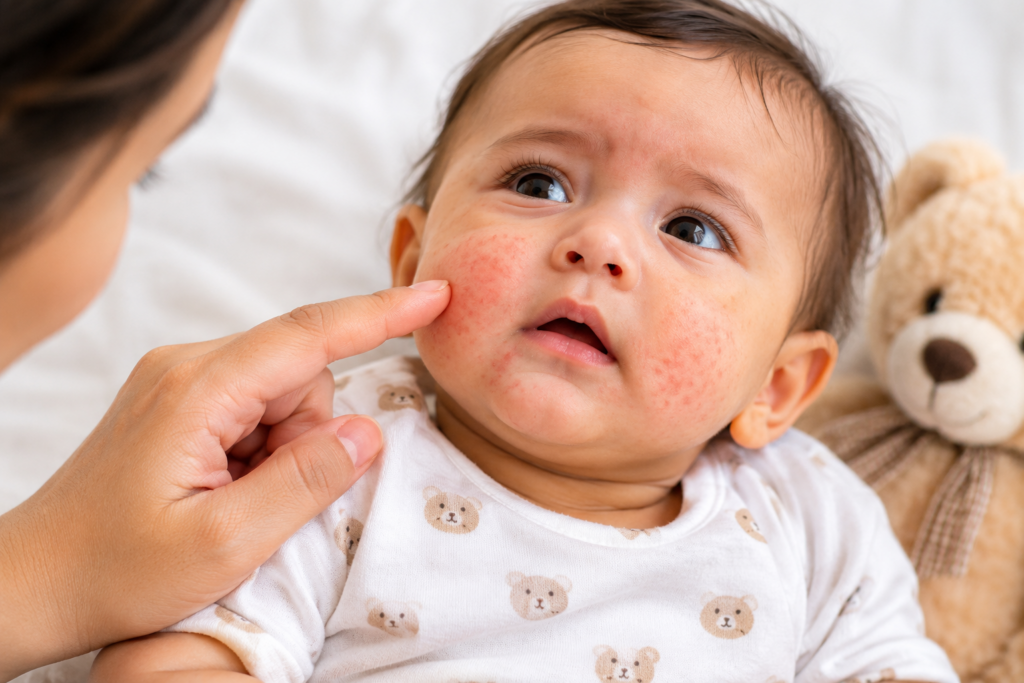
A baby’s skin is delicate and its protective barrier takes months to mature, which is why a baby face rash is such a common worry for new parents. What causes it tends to vary with the baby’s age and surroundings. Most rashes clear without treatment, but some need a doctor’s attention.
According to Dr. Sagardeep Singh Bawa, Consultant Pediatrician in Noida and Neonatologist at Cuddles & Cutis, “Most parents come in worried about a baby rash on the face, and usually it turns out to be minor. We look at the baby’s age, how the rash looks and whether the baby is comfortable. A rash with fever, fast spreading or trouble feeding should be seen sooner.”
How Can Parents Prevent Winter Nosebleeds?
Rarely just one thing
Newborn skin changes. Hormones passed on from the mother in the first few weeks switch on the oil glands, and that’s behind many of the little bumps on a newborn’s cheeks and nose. Questions about newborn skin are a routine part of our newborn and neonatal care.
Drool and milk. Saliva and milk dribbles sit on the chin and cheeks all day, and by evening the skin looks red and rough. Teething makes it worse.
Heat and sweat. Too many layers or a warm, stuffy room can clog the sweat pores and bring out fine red bumps.
Products and fabrics. Scented soaps, wipes, detergents and rough fabrics are the usual suspects. Switching to a fragrance-free baby wash and a mild detergent is a simple first step.
Allergy and infection. If eczema or asthma runs in the family, dry, itchy cheeks are more likely. A rash with fever, or a baby who’s unusually sleepy and feeding poorly, shouldn’t be left to settle on its own. If you suspect an allergy, you should consult a pediatrician for an evaluation.
What Are the Common Types of Baby Rash on the Face?
- Milia: Tiny white spots, 1 to 2 mm across, seen in about half of newborns. They usually go within four weeks.
- Baby acne: Pimple-like bumps on the cheeks, nose and forehead around two to four weeks of age. They can look worse before they improve, then clear over a few months without scarring. Acne creams made for older children or adults are not meant for babies.
- Newborn blotchy rash: Red blotches, sometimes with small yellowish bumps, around day two or three. It fades within a few days.
- Baby eczema: Dry, rough, itchy skin, often on the cheeks, and scratching can crack it. On darker skin it may look brown, grey or purple rather than red.
- Cradle cap: Greasy yellow flakes that begin on the scalp and sometimes spread to the eyebrows and face. They rarely bother the baby.
- Drool rash and heat rash: A sore red patch around the mouth usually comes from drooling, while tiny bumps in sweaty folds suggest heat rash. If either doesn’t settle, our general pediatric care can help.
If a rash keeps returning or you’re not sure what you’re looking at consult a pediatrician
What Determines the Right Treatment for a Baby Face Rash?
The right treatment depends on the type of rash, the baby’s age, possible triggers and family history. Milia and baby acne usually need no treatment, while eczema may require regular skin care and sometimes prescription medication. Products, fabrics, drooling and a family history of eczema or allergies can also influence the treatment plan. If the rash is oozing, blistering or accompanied by fever, consult a doctor. Until then, clean the skin gently with lukewarm water, pat it dry and wipe away drool when needed. Avoid oils, adult skin products and unprescribed creams. A pediatrician can examine the rash and recommend suitable care. For more information, learn about common paediatric skin conditions and their care.
FAQs
Acne bumps don’t bother the baby, while eczema is dry and itchy enough to make them scratch or fuss.
Check with your pediatrician first, because oils can worsen baby acne and some creams irritate the skin.
Milia fade in about four weeks and baby acne in a few months, but eczema keeps coming back and needs ongoing care.
Go if it spreads, oozes, blisters or comes with fever, and head to a hospital at once for facial swelling or trouble breathing.
REFERENCES
Healthier Together (NHS): Rashes in babies. Describes baby acne, milia, eczema and when to seek help. https://www.healthiertogether.nhs.uk/new-parent-and-baby/rashes
NHS 111 Wales: Skin rashes in babies and children. Covers baby acne, cradle cap and home care. https://111.wales.nhs.uk/skinrashesinbabiesandchildren
Disclaimer: This article is for informational purposes only and should not be considered medical advice. Always consult a qualified pediatrician for proper diagnosis and treatment of your baby’s skin condition.
